
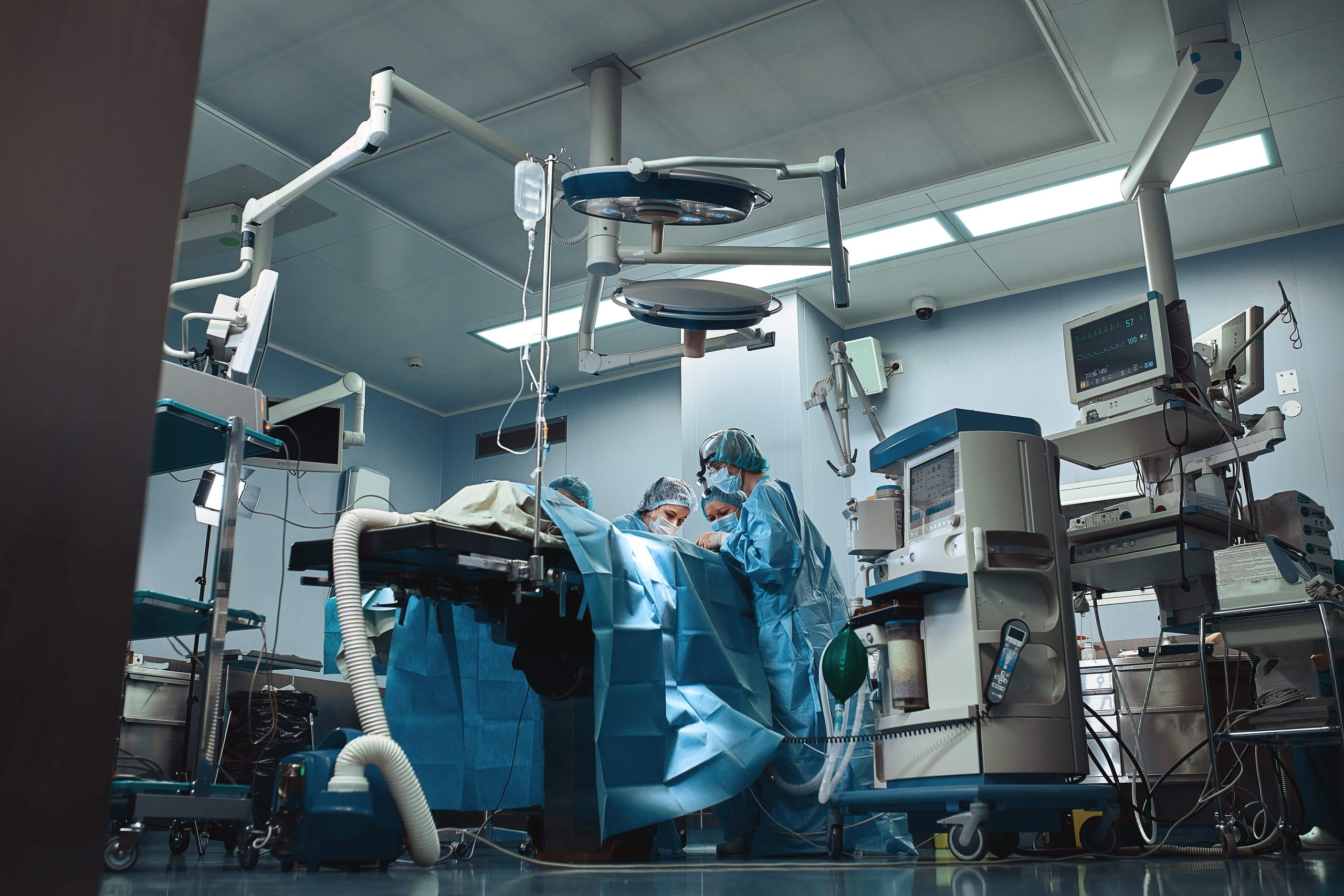
Most healthcare construction projects underestimate medical equipment planning until it becomes a problem. By then, the consequences are already baked into the schedule—structural rough-ins that do not accommodate imaging equipment weights, electrical panels without the capacity the MRI suite requires, IT closets sized for a network that was planned two years before the technology decisions were actually made, and procurement timelines that collide with construction milestones no one coordinated in advance.
Medical equipment planning is not a purchasing function that runs at the end of a project. It is a design driver, a construction constraint, and a procurement discipline that has to be active from the earliest phases of project development. When it is treated as a late-stage task, the results are predictable: change orders, schedule compression, budget overruns, and opening delays caused by equipment that was not ready when the building was.
This article is for healthcare executives, physician owners, facilities leaders, and project stakeholders who need to understand what medical equipment planning actually requires, how FFE and technology integration affect construction scope, and what a procurement strategy has to look like to protect the project schedule and budget.
What Medical Equipment Planning Actually Encompasses
The term “medical equipment planning” covers a broader scope than most project teams initially assume. It is not limited to imaging systems and surgical tables. It spans every piece of equipment, furniture, and technology that has to be in place before the facility can operate—and every infrastructure decision that has to be made during design to support that equipment.
The three major categories that have to be managed as integrated planning workstreams are:
Medical equipment. This includes fixed and movable clinical equipment: imaging systems, surgical and procedural equipment, sterilization systems, patient monitoring systems, physiologic monitoring infrastructure, examination and treatment equipment, and specialty systems tied to specific clinical programs. Fixed equipment—equipment that is built into or structurally connected to the facility—has to be coordinated with structural, mechanical, electrical, and plumbing design before construction documents are issued. Movable equipment has its own procurement and delivery schedule that must align with construction turnover.
Furniture, fixtures, and equipment (FFE). FFE covers clinical and non-clinical furnishings: workstations, seating, casework, privacy curtains and track systems, patient room furniture, reception and waiting area furnishings, and the full inventory of items that make a built space functional for staff and patients. FFE decisions affect millwork specifications, floor loading calculations, electrical outlet placement, and network port locations—all of which are locked into construction documents before most FFE procurement conversations begin.
Information technology and clinical technology integration. IT infrastructure planning covers network architecture, server room and IT closet design, wireless access point placement, nurse call systems, clinical communication systems, electronic health record hardware, workstation-on-wheels infrastructure, telehealth and video conferencing systems, and the growing category of connected medical devices that require both network access and physical installation coordination. Every one of these has infrastructure implications that affect construction scope.
Medical equipment, furniture, and technology planning is the discipline that manages all three of these workstreams as an integrated function—coordinating equipment decisions with design, construction, procurement, and IT in a sequence that protects the project timeline and prevents the infrastructure gaps that surface when equipment planning runs independent of construction.
Why Equipment Planning Has to Begin in Preconstruction
The infrastructure requirements of clinical equipment are fixed early in a project’s design lifecycle. Structural slab thickness to support imaging equipment, floor penetrations for fixed equipment connections, electrical service capacity for high-draw clinical systems, medical gas outlets tied to specific clinical workflows, and mechanical requirements for heat-generating imaging suites—all of these have to be resolved during schematic design and design development, not during construction.
That sequencing requirement means that equipment selection decisions have to be made—or at a minimum constrained—before construction documents are issued. A project team that defers imaging equipment selection until after the building permit is issued will be processing change orders to accommodate the actual equipment when it is finally selected.
Preconstruction and procurement are the phases where equipment planning has the greatest leverage. Owner-side engagement during preconstruction allows the project team to establish equipment parameters that inform structural and MEP design, validate budget assumptions against actual equipment costs before they are locked into a GMP, and identify long-lead items early enough to place orders that align with the construction schedule rather than compress it.
The connection between equipment planning and clinical programming is equally important. Program definition and clinical planning establish the clinical services, workflow requirements, and room-by-room functional program that drives equipment lists. A clinical program that has not been finalized cannot support an accurate equipment plan—which is why equipment planning that begins before clinical programming is complete will inevitably require revision, and why the sequencing of these two workstreams matters as much as the timing of each individually.
Long-Lead Procurement: The Schedule Risk Most Projects Underestimate
Long-lead medical equipment is the category that most reliably creates opening-day delays when procurement planning is inadequate. Imaging equipment, surgical systems, sterile processing equipment, radiation therapy systems, and specialty procedural technology routinely carry manufacturer lead times of sixteen to thirty weeks from order placement to delivery. Some systems—particularly MRI units, CT scanners, and linear accelerators—require site-readiness milestones to be met before installation can begin, adding another layer of scheduling dependency.
The practical implication is straightforward: if a sixteen-to-twenty-week lead-time item is not ordered until construction is well underway, it will not be available when the building is ready for installation. And if the equipment is not installed, tested, and validated before the licensing inspection, the opening date moves.
A sound long-lead procurement strategy requires four things. First, early identification of all long-lead items based on the clinical program and equipment list—not a rough assumption, but a specific inventory of what has to be ordered and when. Second, budget validation against actual current pricing, because equipment costs fluctuate and budget estimates developed at project inception are frequently based on outdated benchmarks. Third, a procurement schedule that works backward from the required installation date, accounting for lead time, site-readiness requirements, and installation duration. Fourth, coordination between the procurement schedule and the construction schedule so that site-readiness milestones—equipment pads, electrical connections, shielding, utility rough-ins—are sequenced to support installation when the equipment arrives.
The American Hospital Association has documented the financial exposure healthcare organizations face when capital equipment procurement is misaligned with facility readiness timelines—a pattern that consistently affects first-year operational performance and revenue realization. Managing that risk requires treating procurement as a project management function, not a purchasing transaction.

IT Integration: The Infrastructure Gap That Keeps Growing
Healthcare IT infrastructure is the fastest-evolving and most frequently underplanned dimension of medical equipment planning. Clinical technology decisions that are reasonable at the start of a three-year project may be outdated by the time the facility opens. Network capacity assumptions made during schematic design may not reflect the connected device density that clinical operations will actually require. And IT closet locations designed around an early network architecture may not serve the wireless coverage requirements of the actual system.
Effective IT integration planning requires a clinical technology inventory that accounts for every device requiring network connectivity—not just desktop workstations and wall-mounted monitors, but infusion pumps, smart beds, telemetry systems, workstations-on-wheels, environmental monitoring systems, and the expanding category of IoT-connected clinical equipment. Each of those devices has a location, power, and network requirement that affects the construction scope.
The coordination between the healthcare organization’s IT department, the design team, and the construction team is where IT integration most commonly breaks down. IT decisions made after construction documents are issued result in surface-mounted conduit, relocated access points, and network infrastructure that is functional but not what anyone would have specified if the decisions had been made in the right sequence.
IT integration planning also has to address the interface between clinical technology and the building systems that support it. Nurse call systems that integrate with the EHR, physiologic monitoring that connects to central stations, and building automation systems that interact with clinical environment controls all require coordination between clinical IT and facility infrastructure that is most effectively managed when a single planning framework covers both.
The Office of the National Coordinator for Health Information Technology provides guidance on health IT infrastructure standards and interoperability requirements that inform clinical technology planning for new and renovated healthcare facilities—a useful reference for project teams establishing IT planning parameters early in design.
Frequently Asked Questions
When should medical equipment planning begin on a healthcare construction project?
Medical equipment planning should begin during schematic design at the latest, and ideally during clinical programming. Fixed equipment infrastructure requirements—structural, mechanical, electrical, and plumbing—have to be resolved before construction documents are issued. Long-lead procurement timelines mean that some equipment orders need to be placed well before construction reaches the installation phase. Starting equipment planning after design is underway consistently produces change orders and procurement conflicts that affect the schedule and budget.
What is the difference between fixed and movable equipment in healthcare project planning?
Fixed equipment is equipment that is structurally connected to or built into the facility—imaging systems, surgical booms, sterilization equipment, and similar items. Fixed equipment has infrastructure implications that affect structural and MEP design and must be coordinated during design development. Movable equipment is freestanding clinical and support equipment that does not require structural integration, but still requires electrical, network, and medical gas connections that have to be planned into the construction scope.
How does FFE planning affect the construction schedule?
FFE decisions affect millwork and casework specifications, floor loading calculations, electrical outlet and data port placement, and ceiling systems in clinical areas. When FFE planning lags behind construction documentation, the result is typically late-stage scope additions, outlet relocations, and casework modifications that generate change orders and extend the construction schedule. Coordinating FFE decisions with the design team during design development prevents the most common and costly conflicts.
Build the Equipment Plan Into the Project From the Start
Medical equipment planning is not a purchasing exercise that happens after the building is designed. It is a design constraint, a procurement discipline, and a technology coordination function that has to be embedded in the project from preconstruction through commissioning and turnover.
Healthcare organizations that treat equipment planning as an integrated project management function—not a standalone procurement task—open their facilities with fewer surprises, cleaner commissioning processes, and budgets that reflect actual costs rather than assumptions that were never validated.
Medical Construction Group works with healthcare owners and project teams to integrate medical equipment, FFE, and technology planning into the full project delivery process. If you are planning a new facility, an expansion, or a major renovation, contact Medical Construction Group to discuss how equipment planning fits into your project structure and timeline.