

Ambulatory surgery centers operate in one of the most compliance-dense environments in outpatient healthcare. Building one—or expanding an existing facility—requires a level of project management discipline that goes far beyond standard commercial construction. Clinical programming decisions made in month one affect licensing timelines eighteen months later. Budget assumptions established before design begins can collapse if life-safety requirements are not scoped accurately from the start.
This article is for healthcare executives, physician owners, and group practice leaders navigating the development of an ASC. The goal is to clarify what a realistic project timeline looks like, where compliance milestones actually fall, and how budget control has to be structured from the beginning—not course-corrected after the fact.
Why ASC Projects Require a Different Management Approach
An ASC is not a clinic buildout with a more sophisticated HVAC system. It is a licensed surgical facility subject to federal certification requirements, state health department oversight, accreditation surveys, and local building code interpretation—simultaneously. The intersection of those regulatory layers creates a project environment where sequence matters as much as speed.
The Centers for Medicare & Medicaid Services sets minimum health and safety standards for ASCs seeking Medicare certification, and those standards have direct implications for how the physical environment is designed, constructed, and documented. State health departments add another layer of requirements that vary significantly by jurisdiction. And most ASCs pursue accreditation through bodies such as The Joint Commission or AAAHC, which introduce their own facility standards for space, equipment, and operational readiness.
Project management for an ASC has to account for all of these simultaneously. That means the construction schedule is not just a GC-driven Gantt chart—it is a compliance milestone map with real licensing consequences at each stage.
The ASC Project Timeline: Phase by Phase
Preconstruction and Clinical Programming (Months 1–4)
The first phase is where the project’s viability is actually determined. Clinical programming defines the surgical specialties, the number and size of ORs, the procedure room configuration, the PACU layout, sterile processing requirements, and the patient flow logic. These decisions drive everything downstream: square footage, MEP scope, equipment budgets, and licensing application parameters.
Rushing this phase is one of the most common sources of downstream cost and schedule problems. Program definition and clinical planning should be completed before schematic design is finalized—not adjusted during design development when change orders are already accumulating.
This phase also includes site due diligence, zoning confirmation, and, where available, initial regulatory pre-application meetings with the state health department. Some states permit pre-application consultation that can surface facility-specific requirements early. Taking advantage of that process is not optional for a well-managed project.
Design and Permitting (Months 3–9)
Design development for an ASC needs to be coordinated with the Facility Guidelines Institute standards applicable to the project, local Authority Having Jurisdiction interpretation, and any state-specific requirements for licensed surgical facilities. The FGI Guidelines for Design and Construction of Outpatient Facilities are the foundational reference for space requirements, ventilation standards, and clinical environment design in most U.S. jurisdictions.
Life-safety plan review—fire protection systems, egress, occupancy classification, and mechanical compliance—typically occurs during this phase and can add eight to sixteen weeks to permitting timelines if the design team is not coordinating with the AHJ proactively. ASCs classified as ambulatory surgical centers under NFPA 101 have specific egress, fire protection, and interior finish requirements that must be designed in, not retrofitted after permit review flags a deficiency.
Budget validation should happen at the end of design development, not at GMP. By the time a GC presents a guaranteed maximum price, major scope decisions have already been locked. Owner-side cost control means benchmarking scope and budget alignment at design development and again at construction documents—before the GC is in control of the number.
Construction (Months 8–18)
Construction duration for an ASC varies significantly by project size and complexity. A ground-up single-specialty ASC with two ORs might be delivered in twelve to fourteen months of active construction. A multi-specialty facility with sterile processing, imaging, and six or more ORs can run for 18 to 24 months.
During construction, the compliance milestone calendar is running in parallel. State health departments may require notification at specific construction milestones—structural rough-in, mechanical rough-in, or pre-inspection walk-throughs before wallboard is closed. Missing those notification windows can delay the licensing application process by months, regardless of how the construction schedule performs.
Medical equipment procurement must be explicitly sequenced into the construction schedule. Long-lead items—surgical tables, imaging equipment, sterilization systems, nurse call infrastructure—have lead times of 16 to 20 weeks. Equipment coordination that starts at GMP rather than design development creates conflicts with construction sequencing and often forces budget adjustments at the worst possible time. Medical equipment, furniture, and technology planning is not a purchasing exercise—it is a project management function that has to be embedded in the schedule.
Commissioning, Inspections, and Licensing (Months 16–20)
The back end of an ASC project is where project management failures surface in the most damaging way. Substantial construction completion does not equal operational readiness, and the gap between those two milestones is where poorly managed projects stall.
Commissioning of HVAC systems—especially in ORs and sterile areas—must verify that temperature, humidity, air-change rates, and pressure relationships meet both design specifications and regulatory requirements. ASHRAE Standard 170 governs HVAC requirements for healthcare facilities, and surgical environment commissioning often requires testing documentation that the state health department will review as part of the licensing inspection.
The licensing inspection itself—typically conducted by the state health department and potentially by a CMS surveyor or accreditation body—requires that the facility be substantially complete, that equipment be installed and operational, and that policies and procedures be in place. Inspectors are not evaluating construction quality in isolation; they are evaluating whether the facility is ready to operate as a licensed surgical center.
Activation, licensing readiness, and move management have to begin well before the inspection date. Staff hiring, training, mock surveys, policy documentation, and operational readiness reviews cannot be compressed into the final four weeks of a project. Those functions are parallel workstreams, not a closing checklist.
Budget Control: Where ASC Projects Lose Money
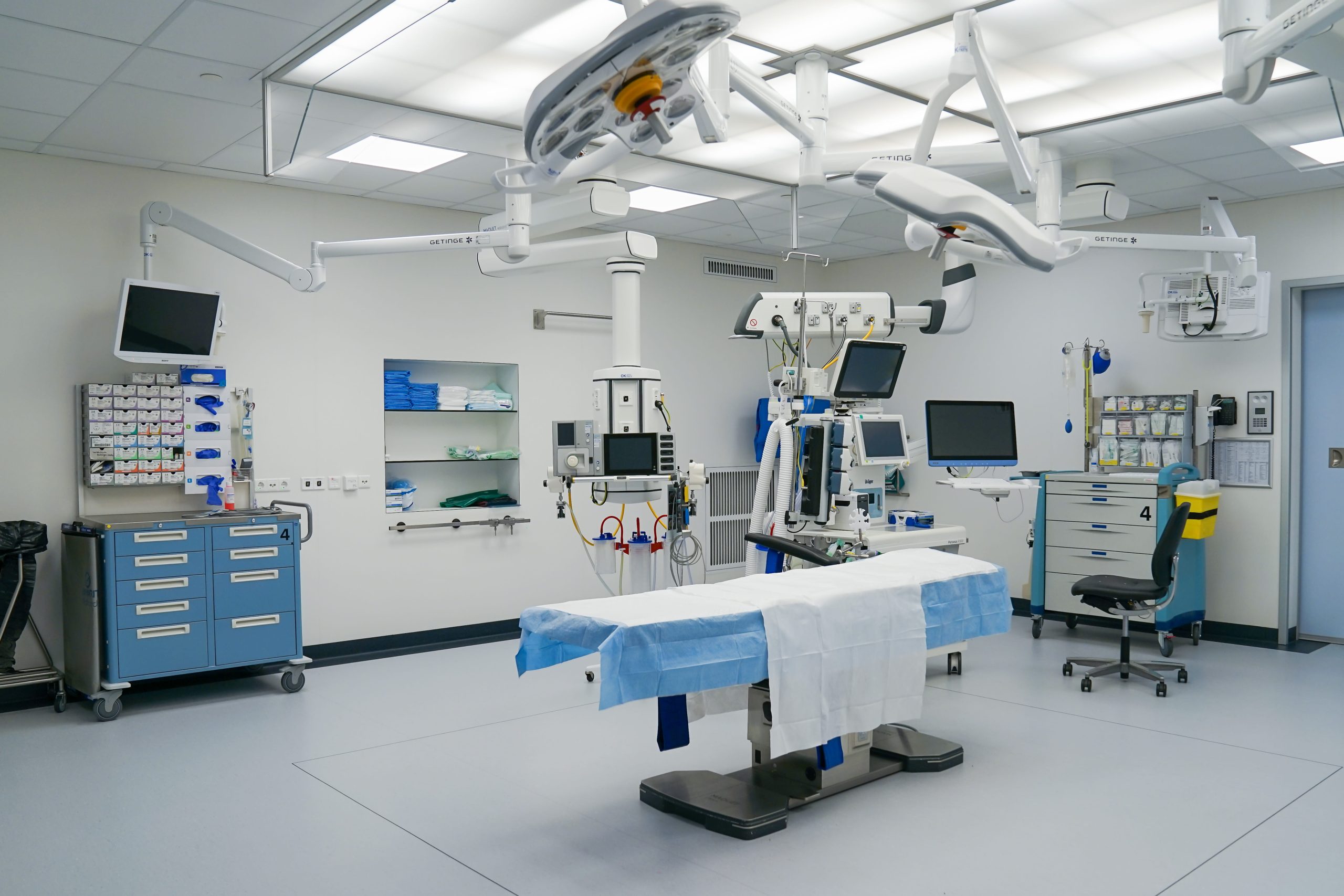
The most consistent source of budget erosion in ASC projects is front-end scope definition failure. When clinical programming is incomplete, the design scope is uncertain. When the design scope is uncertain, contractor pricing is based on assumptions that will be corrected later through change orders.
Owner-side budget control requires three things: an accurate project budget that includes all soft costs, FFE, technology, and owner contingency—not just hard construction costs; a scope baseline established before design begins; and a change management process that connects every scope change to a cost and schedule consequence before it is approved.
Compliance, risk, and specialty consulting adds another layer of budget protection in ASC projects by identifying regulatory requirements early that would otherwise surface as costly design revisions or construction changes.
The other major budget risk in ASC development is timeline slippage driven by licensing delays. A delayed opening date does not just affect cash flow—it affects physician partner confidence, staff retention, and the financial model that justified the project in the first place. Budget control and schedule control are not separate disciplines. In an ASC project, they are the same problem.
Frequently Asked Questions
How long does it typically take to develop an ambulatory surgery center from concept to opening?
For a ground-up ASC, total project duration from initial programming through licensing and opening typically ranges from twenty-four to thirty-six months. That range reflects variability in site conditions, state licensing timelines, design complexity, and construction market conditions. Projects that begin with incomplete clinical programming or delayed state pre-application engagement tend to fall at the longer end of that range.
What are the most common compliance failures that delay ASC licensing?
The most common issues include ventilation systems that fail to meet required air-change rates or pressure relationships at commissioning, life-safety deficiencies identified during state inspections that require design corrections, missing or incomplete equipment documentation, and policy and procedure gaps identified during accreditation surveys. Most of these failures are preventable with earlier compliance coordination.
When should the owner’s representation or program management be engaged on an ASC project?
The answer is before clinical programming is finalized and before the design team is selected. Engaging owner-side project leadership after design is underway limits the ability to control scope, budget, and regulatory strategy at the phases where those decisions have the most leverage.
How Medical Construction Group Supports ASC Development
ASC projects concentrate a large number of interdependent decisions into a compressed timeline, with licensing consequences attached to every major milestone. Medical Construction Group works with healthcare owners and operators to provide the owner-side oversight, compliance coordination, and project management structure that an ASC project requires—from clinical programming through licensing and activation.
If you are planning an ambulatory surgery center, contact Medical Construction Group to discuss your project scope, timeline, and the specific milestones that will determine your path to a successful opening.